
No Surge Pricing Car Service Explained
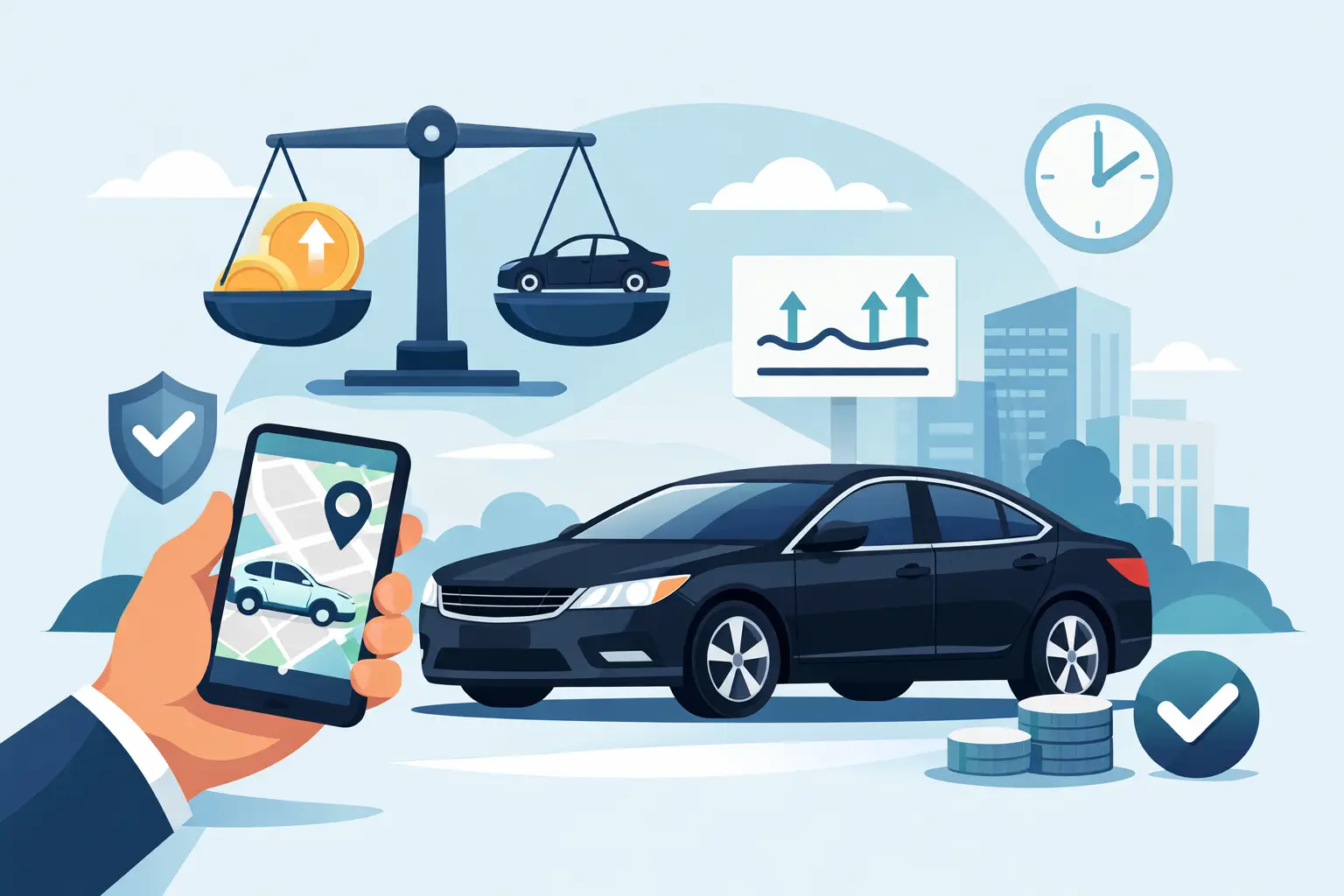
A flight lands late, the terminal is crowded, and the price on your phone jumps just as you need a car most. That moment is exactly why demand for a no surge pricing car service keeps growing among business travelers, executive assistants, and anyone booking premium ground transportation with a schedule to keep.
If you are arranging airport pickups, client travel, or a city-to-city trip, price certainty is not a nice extra. It is part of the service. When the fare changes because demand spikes, budgeting becomes harder, approvals take longer, and the trip starts with friction. A fixed-price model removes that problem before the vehicle even arrives.
What a no surge pricing car service actually means
A no surge pricing car service gives you a fare that does not rise simply because demand is high, weather is poor, or a major event is ending nearby. The quote you see is the price you agree to pay, assuming the booking details stay the same.
That sounds simple, but it matters because many travelers use "fixed pricing" and "no hidden fees" as interchangeable terms. They are related, not identical. Fixed pricing means the base fare is agreed in advance. No hidden fees means the quote is transparent about what is included and what could change, such as additional waiting time beyond the included window or a different pickup point requested after booking.
A credible premium service should be clear on both. Without that clarity, "no surge" can sound better than it really is.
Why no surge pricing matters more in premium travel
For casual local rides, some passengers accept fare swings as part of convenience. Premium travel is different. The traveler is often heading to a flight, meeting a client, hosting a guest, or moving between cities on a fixed timeline. In those moments, predictability matters as much as the vehicle itself.
For corporate travel arrangers, a fluctuating fare creates a paperwork problem. A price that changes between planning and booking can complicate approvals, expense policies, and client billing. For executive assistants, it creates unnecessary back-and-forth. For the traveler, it raises an immediate question about trust: if the price is moving this much now, what else about the trip is uncertain?
This is where a chauffeur-style booking model has a clear advantage. It treats transportation as a scheduled service rather than an on-demand scramble. That usually means booked-in-advance pricing, clearer vehicle standards, and more control over the details that matter.
No surge pricing car service vs ride-hailing apps
The biggest difference is not only price. It is how the trip is structured.
Ride-hailing apps are built around live supply and demand. That model is efficient when cars are plentiful and your needs are simple. It becomes less appealing when you need a specific pickup time, a professional meet and greet, luggage capacity, or confidence that the car class booked is the car class arriving.
A no surge pricing car service typically works on pre-confirmed rates rather than real-time market spikes. You book a known service level, for a known journey, at a known price. That does not mean every scenario is identical. If your itinerary changes significantly, your final cost may change too. But the service is not designed to capitalize on temporary demand spikes.
That distinction matters most at airports, during rail disruption, after concerts, and on major business travel days. Those are the exact moments when people most need reliability and are least willing to spend time comparing unpredictable fares.
Where fixed pricing helps most
Airport transfers are the most obvious case. If your plane lands at a busy hour or is delayed into a peak period, surge-based fares can make onward travel unnecessarily expensive. A pre-booked chauffeur service with fixed pricing keeps the cost stable and the arrival process calm.
City-to-city travel is another strong use case. Long-distance ground transport should be easy to budget in advance, especially for company travel or high-value leisure trips. A fixed quote helps you compare service classes properly instead of guessing what the final bill might become.
Hourly bookings also benefit from transparency, though this is where customers should read the details carefully. The rate may be fixed for the reserved time block, but extra hours, revised routing, or extended waiting may be charged separately. That is not surge pricing. It is simply the difference between the trip booked and the trip delivered.
What to check before you book
Not every operator that avoids surge pricing offers the same level of transparency. A strong booking experience should show the fare clearly, the vehicle class, and the main service terms before payment.
Look closely at what the quoted price includes. For airport pickups, check whether flight tracking and a waiting period are included. For business travel, confirm whether the booking covers meet and greet, parking, and standard luggage. For longer journeys, make sure the route assumptions are clear.
It is also worth checking how the platform vets its operators. Price certainty is useful, but it should not come at the cost of service quality. Professional chauffeurs, commercially appropriate vehicles, and consistent standards are what turn a fixed fare into a dependable experience.
A platform such as Limohawk is built around that balance: upfront pricing, vetted operators, and a simpler comparison process than contacting individual chauffeur companies one by one.
The trade-off: no surge does not mean cheapest
There is a practical point here. A no surge pricing car service is not always the lowest headline price at every hour of every day. During quiet periods, an on-demand app may occasionally look cheaper.
But that comparison can be misleading. Premium ground transportation is not only about getting from A to B. It is about confirmed service, vehicle quality, professional presentation, and fewer variables on the day of travel. For many customers, especially those booking airport transfers, executive travel, or important guest movements, those factors outweigh the chance of a lower off-peak fare.
The better question is not "What is the cheapest ride right now?" It is "What level of certainty do I need for this trip?" If the answer is high, a fixed-price chauffeur model usually makes more sense.
How to tell if pricing is truly transparent
Transparency shows up in the booking flow. If you can see your options, compare vehicle classes, understand the fare, and book without waiting for manual quotes, that is a strong sign the pricing model is built for clarity.
By contrast, if you need to submit an inquiry and wait for a custom response just to get a baseline fare, budgeting becomes slower and comparison becomes harder. That may still work for highly specialized travel, but it is not ideal for most airport, business, or intercity bookings.
A transparent service should also explain exceptions without burying them. Reasonable extra charges for substantial itinerary changes are normal. Vague language around add-ons is not. Clear terms build trust because they show the operator is not relying on ambiguity later.
Who benefits most from this model
Frequent business travelers benefit because they can plan costs before the trip and avoid last-minute surprises after a delayed arrival. Corporate travel teams benefit because approvals are cleaner and service expectations are easier to standardize. Executive assistants benefit because they can book confidently without chasing multiple providers for quotes.
Affluent leisure travelers benefit too, particularly when arriving in unfamiliar cities or traveling with family, luggage, or tight event schedules. If you are landing in London after an overnight flight or heading from Manchester to an important meeting, the value of a confirmed fare and a professional pickup becomes very concrete.
Booking with the right expectation
The smartest way to use a no surge pricing car service is to treat it as planned transport, not a last-second gamble. Book the correct vehicle class, enter the details accurately, and choose a provider or platform that makes the inclusions obvious.
When that happens, the experience feels different from standard ride-hailing. You are not watching the fare fluctuate or wondering what will arrive. You are selecting a service level, confirming a price, and moving on with your day.
That is the real appeal. Not just avoiding surge pricing, but removing uncertainty from a part of travel that has a habit of becoming unpredictable at exactly the wrong time.
The best car service is not the one that looks cheapest for thirty seconds on a busy screen. It is the one you can book with confidence and stop thinking about after that.