
Executive Car Hire vs Taxi: What Changes?
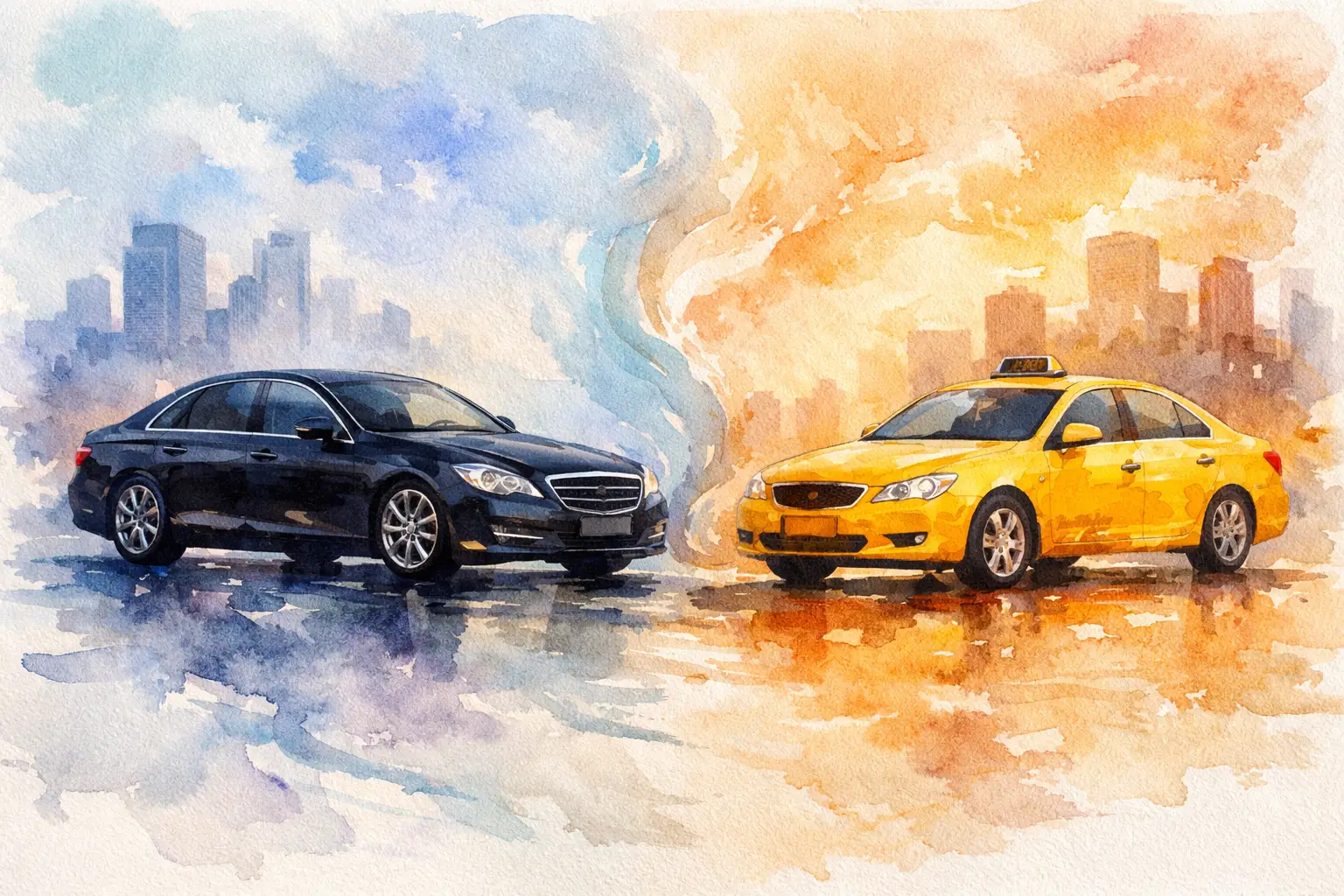
Miss a pickup after a long-haul flight or arrive at a client meeting in a tired, cramped car, and the difference between executive car hire vs taxi stops being theoretical. It becomes a question of time, control, and how much uncertainty you are willing to accept on the day.
For some trips, a taxi is completely fine. For others, it introduces too many variables - from wait times and fare fluctuations to vehicle quality and driver consistency. Executive car hire sits at the other end of the spectrum. It is built for planned travel, fixed expectations, and a more professional standard of service. If you are deciding between the two, the right choice depends less on status and more on what the journey actually needs to deliver.
Executive car hire vs taxi: the core difference
A taxi is designed for point-to-point convenience. You need a ride now, you request one, and the nearest available driver takes the trip. That model works well for short urban hops, low-stakes errands, or moments when speed of access matters more than the experience itself.
Executive car hire is structured differently. The journey is booked in advance, the vehicle class is known, and the service is centered on reliability rather than availability. You are not simply paying for transport from one address to another. You are paying for planning, punctuality, presentation, and a controlled booking experience.
That distinction matters because not all journeys carry the same risk. If you are heading to dinner, a taxi may be enough. If you are traveling to the airport at 5:00 a.m., collecting an international guest, or moving between meetings on a tight schedule, the cost of a poor transport experience can quickly outweigh the savings.
When a taxi makes sense
There is no need to overcomplicate it. Taxis still have a clear role.
If your trip is short, local, and flexible on timing, a taxi is often the simplest option. It can be practical when you are moving around a city with no fixed agenda, when the destination is close by, or when service level is not a priority. In dense city areas, taxis can also be useful when booking ahead feels unnecessary.
The trade-off is that the experience can vary. One ride may be efficient and comfortable. The next may involve a longer wait, a less suitable vehicle, limited luggage space, or a fare that ends higher than expected. That inconsistency is usually tolerated because the stakes are low.
When executive car hire is the better fit
Executive car hire earns its value when certainty matters.
Airport transfers are a good example. With a pre-booked executive service, the pickup is arranged around the flight, the route is understood in advance, and the vehicle standard is part of the booking rather than a surprise at the curb. For business travelers, that removes a layer of friction at exactly the point in the journey when delays are most disruptive.
It is also the stronger option for corporate travel. If an executive, client, or board member needs transport, most companies are not looking for the cheapest possible ride. They are looking for punctuality, professionalism, and a service that reflects well on the business. A chauffeur-driven executive car creates a more reliable handoff than hoping a taxi arrives on time and in suitable condition.
Then there are occasions where time inside the vehicle matters as much as the drive itself. If you need to take calls, review notes, host a colleague, or simply arrive composed, an executive saloon or SUV offers a very different environment from a standard taxi.
Price certainty is often the real dividing line
Many people compare executive car hire and taxis on headline cost alone. That is understandable, but it can be misleading.
A taxi may look cheaper at first glance, especially on a short route. But the final price can shift due to traffic, route changes, waiting time, time of day, or local demand. In ride-hail style models, surge pricing adds another layer of unpredictability. If you are booking during peak hours, after an event, or during weather disruption, the fare you expected may no longer be available.
Executive car hire typically works on fixed pricing agreed at the time of booking. That means the financial decision is clearer from the start. For businesses, travel arrangers, and anyone managing a budget, that matters. A higher initial quote can still represent better value if it removes hidden extras and reduces the risk of last-minute fare inflation.
This is one reason premium ground transport has become more practical for a broader range of travelers. Through platforms such as Limohawk, customers can compare vetted chauffeur options with transparent, real-time pricing instead of chasing manual quotes or guessing what the final bill will be.
Vehicle standards are not a small detail
Comfort is sometimes dismissed as a luxury issue. In practice, it often affects performance.
A taxi can be clean and perfectly adequate, but vehicle quality is rarely the same from one booking to the next. You may get a spacious, well-kept car, or you may get something that feels worn, tight on legroom, or unsuitable for luggage. If you are traveling with clients, senior colleagues, or family after a long journey, that inconsistency can be frustrating.
With executive car hire, the vehicle category is part of the product. If you book an executive saloon, luxury SUV, or executive MPV, you know what class of vehicle to expect. That does not just improve comfort. It helps with planning. You can book for the number of passengers, the amount of luggage, and the standard of arrival you need.
In cities such as London or Manchester, where airport and business travel often involve longer road time, that upgrade can make a meaningful difference rather than a cosmetic one.
Reliability is where executive service tends to pull ahead
The biggest gap in executive car hire vs taxi is not always the car. It is the operating standard behind it.
Taxi availability depends on supply in the moment. During busy periods, major events, rail disruption, or bad weather, availability can tighten quickly. Even when a car is available, pickup timing may be less precise than you want for a critical journey.
Executive car hire is planned around the reservation. The operator expects the journey, allocates the vehicle, and prepares for the pickup window. That does not make delays impossible, but it does create a service model built around commitment rather than convenience.
For executive assistants and corporate travel planners, this difference is significant. The cost of uncertainty is rarely limited to transport. If the traveler is late, the meeting starts poorly. If the airport transfer fails, the rest of the schedule is affected. Reliable ground transport protects more than the ride itself.
Service style matters more than many first-time bookers expect
A taxi driver’s job is to complete the trip safely and efficiently. That is often all you need.
Executive chauffeur service usually adds another layer of professionalism. The driver is expected to be punctual, presentable, and service-focused. There is more consistency in how passengers are greeted, how luggage is handled, and how the journey is conducted. For business use, this matters because every touchpoint contributes to the impression you create.
That said, not every journey needs that level of formality. If you are making a casual solo trip across town, the extra service may not justify the higher rate. This is where context matters. Executive car hire is best used where standards, timing, or presentation have real value.
Which one should you choose?
If the priority is immediacy and the trip is low risk, a taxi is often enough. It is functional, accessible, and suitable for plenty of everyday journeys.
If the priority is control, fixed pricing, vehicle quality, and dependable service, executive car hire is usually the smarter option. That is especially true for airport transfers, business meetings, event travel, client pickups, and any journey where being on time and properly accommodated is non-negotiable.
The most useful way to think about it is this: taxis are built for getting a ride. Executive car hire is built for delivering a standard. Once the journey carries cost beyond the fare itself - missed time, poor presentation, unnecessary stress, or budget uncertainty - that distinction becomes easy to justify.
The right choice is not always the more premium one. It is the one that removes the most risk for the trip you are taking. If your schedule, passengers, or purpose leave little room for error, paying for certainty is often the more efficient decision.