
Chauffeur Child Seats: What Families Should Expect
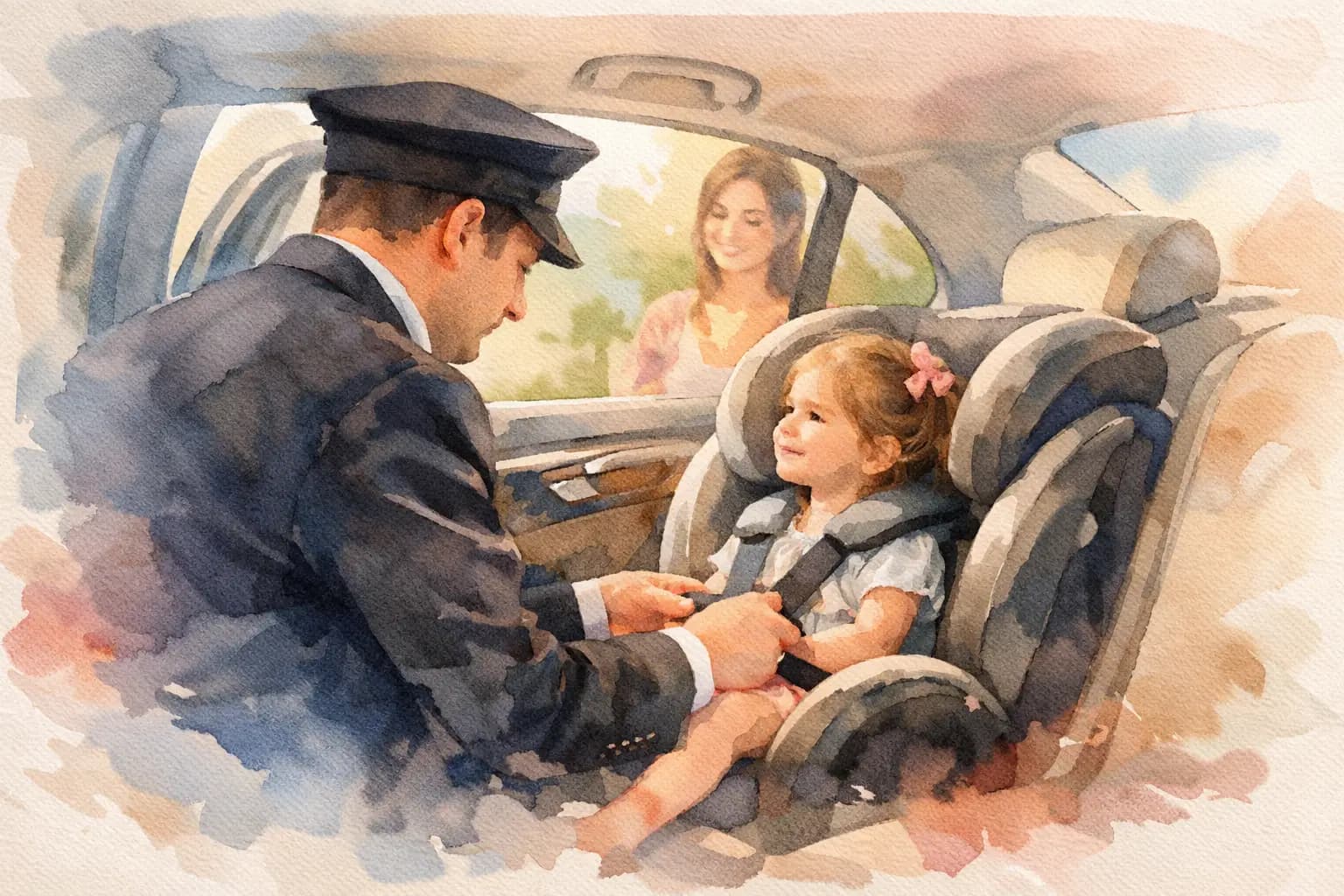
A 6:30 a.m. airport pickup is not the moment to discover that the vehicle has no suitable seat for your toddler. When booking chauffeur child seats, the detail matters just as much as pickup time, vehicle class, and price. A premium family transfer should make the journey calmer from the first confirmation, not leave parents negotiating safety arrangements at the curb.
For families traveling in the UK, the practical standard is straightforward: state every child’s age, height, and approximate weight before booking, and receive confirmation that an appropriate restraint can be provided and fitted. The legal minimum may allow exceptions in certain licensed vehicles, but a reliable chauffeur service plans for safety rather than relying on exceptions.
What chauffeur child seats should include
A child seat request is not a generic add-on. An infant, a three-year-old, and an eight-year-old need very different restraints, and the seating configuration of the vehicle can affect what is possible. The provider should match the restraint to the child, the journey, and the vehicle rather than simply confirming that a “car seat” is available.
For babies and younger infants, this normally means a rear-facing infant carrier or rear-facing seat. Younger children may need a forward-facing harnessed seat, while older children often require a high-back booster that positions the adult seat belt correctly. A booster cushion alone may be permitted in some circumstances, but it does not provide the same head and side-impact support as a high-back model. For longer journeys, that extra support can make a meaningful difference to comfort as well as protection.
Correct installation matters just as much as the seat itself. Depending on the vehicle and seat design, the chauffeur may use ISOFIX anchor points or the vehicle’s three-point seat belt. A professional operator should know which restraint is approved for the assigned vehicle and should not force a fit that is unsuitable or unstable.
In the UK, children generally need an appropriate child restraint until they are 12 years old or 135 cm tall, whichever comes first. There are limited rules for taxis and private-hire vehicles when a suitable seat is unavailable, particularly for rear-seat travel. Those rules are a legal fallback, not the level of preparation most families expect from a pre-booked chauffeur service.
Give the right information before you travel
The simplest way to avoid last-minute changes is to make the child-seat requirement part of the original booking. Do not assume that selecting an SUV or MPV automatically means seats are included. Extra vehicle space can be useful, but availability, seat type, and installation still need to be confirmed.
Provide each child’s age, height, and weight where possible. Height and weight are especially useful where a child is near the transition between seat categories. Also specify whether the child can safely use a high-back booster or still needs a harnessed seat. If you are unsure, say so rather than guessing. A quality provider can use the details to verify the most appropriate option.
It also helps to mention the number of adults, the amount of luggage, and whether you are carrying a stroller. A family of four with two rear-facing seats and four large suitcases may be better served by an executive MPV than an executive sedan, even if the sedan technically has enough passenger seats. A good booking experience considers the whole travel setup, not only the passenger count.
For airport transfers, include your flight number and scheduled arrival time. This allows the operator to monitor the journey and adjust for delays where the service terms allow. It also gives the chauffeur time to prepare the correct seating arrangement before you reach the pickup point.
Choosing the right vehicle for a family transfer
Vehicle choice is often where comfort and practicality meet. An executive sedan can work well for one child and light luggage. For two or more children, particularly when multiple restraints are needed, an executive SUV or MPV will usually offer more flexibility.
The key question is not simply whether the vehicle has enough seats. Ask whether the required child restraints can be fitted safely while leaving usable space for other passengers. Some vehicles have narrow rear seating positions, prominent seat-belt buckles, or limited ISOFIX locations. These factors can make three-across seating impractical, even in a vehicle marketed as spacious.
An executive MPV is usually the clearest choice for larger family groups, grandparents traveling with children, or airport trips with strollers and substantial luggage. It can also make loading less stressful, particularly after a long-haul flight. The trade-off is that larger vehicles may have more limited availability at busy times, so advance booking is sensible.
For corporate travelers arranging transport for visiting colleagues and their families, it is worth confirming the child-seat requirements directly rather than asking the guest to manage them after arrival. Clear details in the booking reduce friction for everyone and show the same care expected in the rest of the travel itinerary.
Questions worth asking before you book
A professional chauffeur provider should answer child-seat questions clearly. You should be able to establish the seat category offered, whether it is suitable for your child’s measurements, and whether it will be installed before pickup. If the provider cannot confirm these basics, the booking has an avoidable gap.
Ask whether the child seat is included in the quoted fare or charged separately. Transparent pricing matters here: a family should see any child-seat cost before payment, not find an unexplained add-on after the journey. The same applies to waiting time, airport parking, and vehicle upgrades. A fixed, clearly presented fare gives you a better basis for comparing options.
You may also want to ask about the condition and cleaning process for supplied seats. The seat should be clean, complete, and free from visible damage. While parents do not need a technical inspection at the curb, it is reasonable to expect equipment that is well maintained and ready to use.
If your child has specific needs, raise them early. This could include a medical support requirement, a preference for rear-facing travel, or a child who is particularly sensitive to motion sickness. Not every request can be accommodated in every vehicle, but early notice gives the operator the best chance of providing a suitable solution.
Should you bring your own child seat?
Bringing your own seat can be the right choice when your child is very young, has a specialist restraint, or is most comfortable in a familiar seat. It gives you direct control over the model and its history, which can be reassuring for frequent travelers.
The downside is logistics. You will need to carry the seat through terminals, store it at your destination, and ensure it is compatible with the vehicle collecting you. If you plan to use the same seat for the flight, rental car, and chauffeur transfer, check the arrangement carefully before departure.
A supplied seat is often more convenient for airport arrivals, city-to-city journeys, and one-way transfers. The best option depends on your child’s needs and how much equipment you want to manage. What should not vary is confirmation: whether the seat is yours or supplied, the chauffeur should know the plan before arriving.
A better standard for family travel
Luxury travel is often described in terms of leather interiors, bottled water, or extra legroom. For parents, the more valuable form of luxury is certainty. It is knowing the right vehicle will arrive, the fare will match the booking, and your child can travel safely without an improvised solution.
Platforms such as Limohawk make that decision easier when they present vehicle choices, fixed pricing, and child-seat requirements clearly before booking. The goal is not to add complexity to family travel. It is to remove the questions that should have been answered before the car reaches the door.
Before confirming your next transfer, treat the child-seat request as a core part of the journey, not an afterthought. A few accurate details at booking can turn a rushed airport pickup into the composed start or finish of a family trip.